
How collective self-consumption works
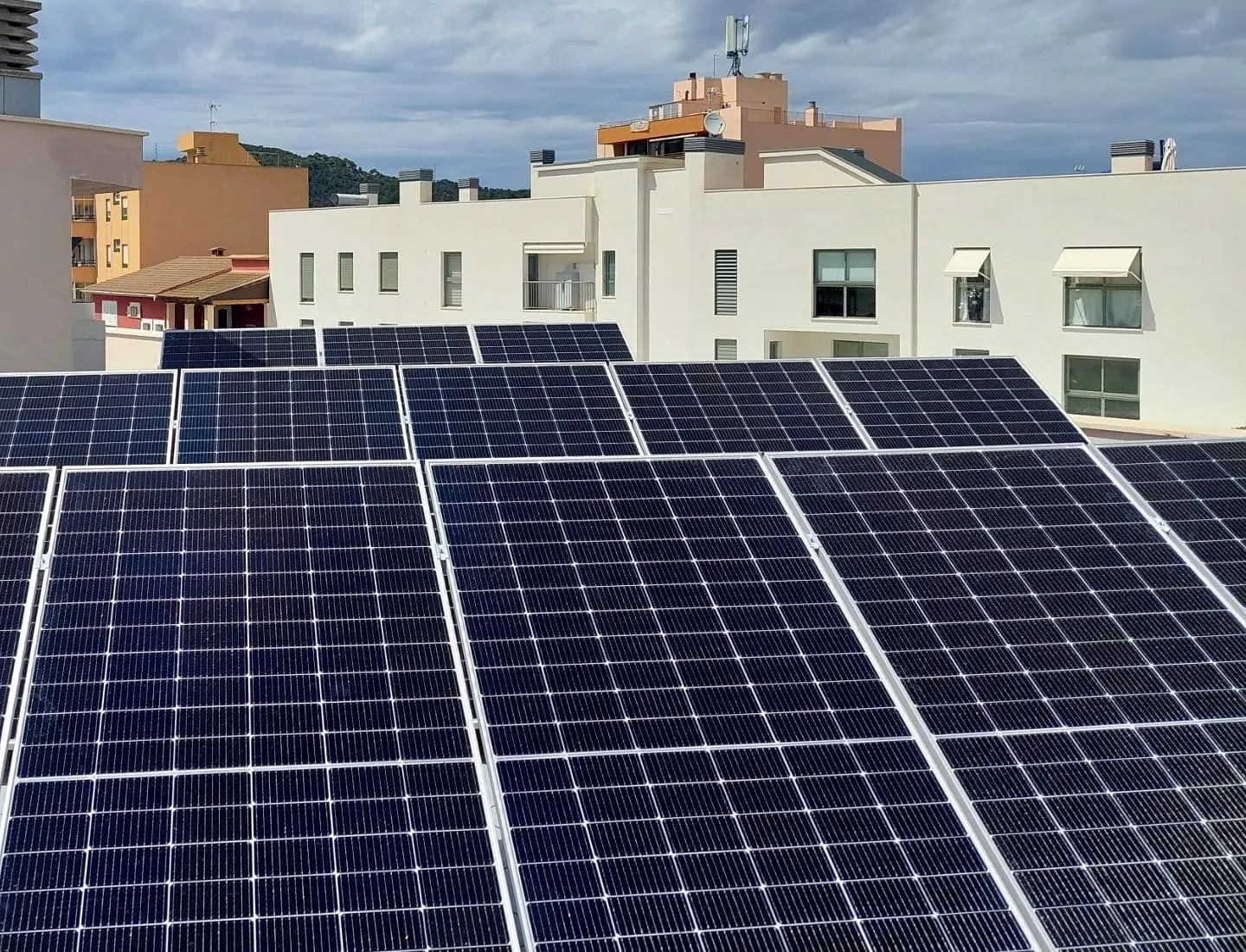
A single system on the communal roof supplies the residents who sign up and the shared services. Each participant receives a percentage of the output under a sharing agreement, which can be fixed or vary by hour, and anything they do not use is credited on their bill.
Residents who do not take part pay nothing, and the community can add participants later by updating the sharing agreement with the grid operator.
What majority the owners’ meeting needs
Installing renewables on common elements is one of the easiest decisions to pass: Spain’s Horizontal Property Act allows it with the favourable vote of one third of the owners representing one third of the shares. Neither unanimity nor a simple majority is required.
Owners who do not vote in favour do not pay for the installation, and can join later by paying their updated share. We prepare the meeting documents for the property manager: technical proposal, cost, estimated saving per home and the wording of the resolution.
FACTOR 2026 grants for communities: up to 70 %
Owners’ associations are among the best-treated applicants in the Balearic government’s FACTOR programme: solar can receive up to 70 %, battery storage between 30 % and 45 %, and garage charging points up to 70 %, with a maximum of €2,500 per point.
On top of that come the municipal IBI and ICIO rebates, which many Mallorcan town halls also apply to buildings under horizontal property. We prepare and file all the paperwork.
Who can take part
Residents can join, and so can the ground-floor shops, whose daytime consumption is ideal for self-consumption. The rules also allow nearby consumers: within 500 metres, with the same cadastral reference or connected to the same transformer station.
In developments with several blocks this opens the door to one system shared between all of them, instead of one per building.
Start with the communal areas
The lift, stair and garage lighting, water pumps and pool filtration run every day and mostly in daylight, so they are the best starting point: the community saves from the first month regardless of how many residents join.
A 20 kWp system on the roof of a Palma apartment block produces about 31,500 kWh a year. The communal services alone cover a significant share of the community’s bill, and the rest is shared among participating residents.
EV charging in the garage
Installing a charging point in your own space does not require the meeting’s approval: you only have to notify the community. What does make sense is planning the whole garage at once, with a prepared line and a power-management system, so the next neighbours only have to plug in.
If the community has panels, cars can charge from the midday solar surplus — the cheapest energy of the day.
For property managers
We regularly work with property managers in Palma and across Mallorca: a single technical contact, a proposal ready for the meeting, grant management, registration and a production report you can attach to the community’s annual accounts.
We support you throughout
We know the hardest part is reaching agreement, so we help from day one:
- Technical and financial study of the building, with the saving per home
- A clear presentation for the owners’ meeting
- Sharing agreement and documentation for the grid operator
- Installation, registration and grant management
- Monitoring and support for the property manager