What a solar battery costs in Mallorca
The price depends on the brand and capacity of the battery, whether the supply is single-phase or three-phase, whether you already have panels and a compatible inverter, and whether you want backup during power cuts. We work with fixed quotes, with the equipment, installation, protections, configuration and registration included, and give you yours in writing after the free site survey.
Battery grants: FACTOR 2026 is now closed
The Balearic government’s FACTOR 2026 programme covered 45 % of the battery cost for private homeowners, between 30 % and 45 % for companies depending on their size (45 % under de minimis) and between 30 % and 45 % for owners’ associations. It closed to applications on 17 October 2026 because its budget ran out.
If you already applied, the decision arrives within six months of the application and the installation must then be justified: we help you with that. For new projects, the town hall IBI and ICIO rebates and, for Spanish taxpayers, the income-tax deduction may apply, subject to their conditions. We are keeping an eye on any future call.
What changes on your bill
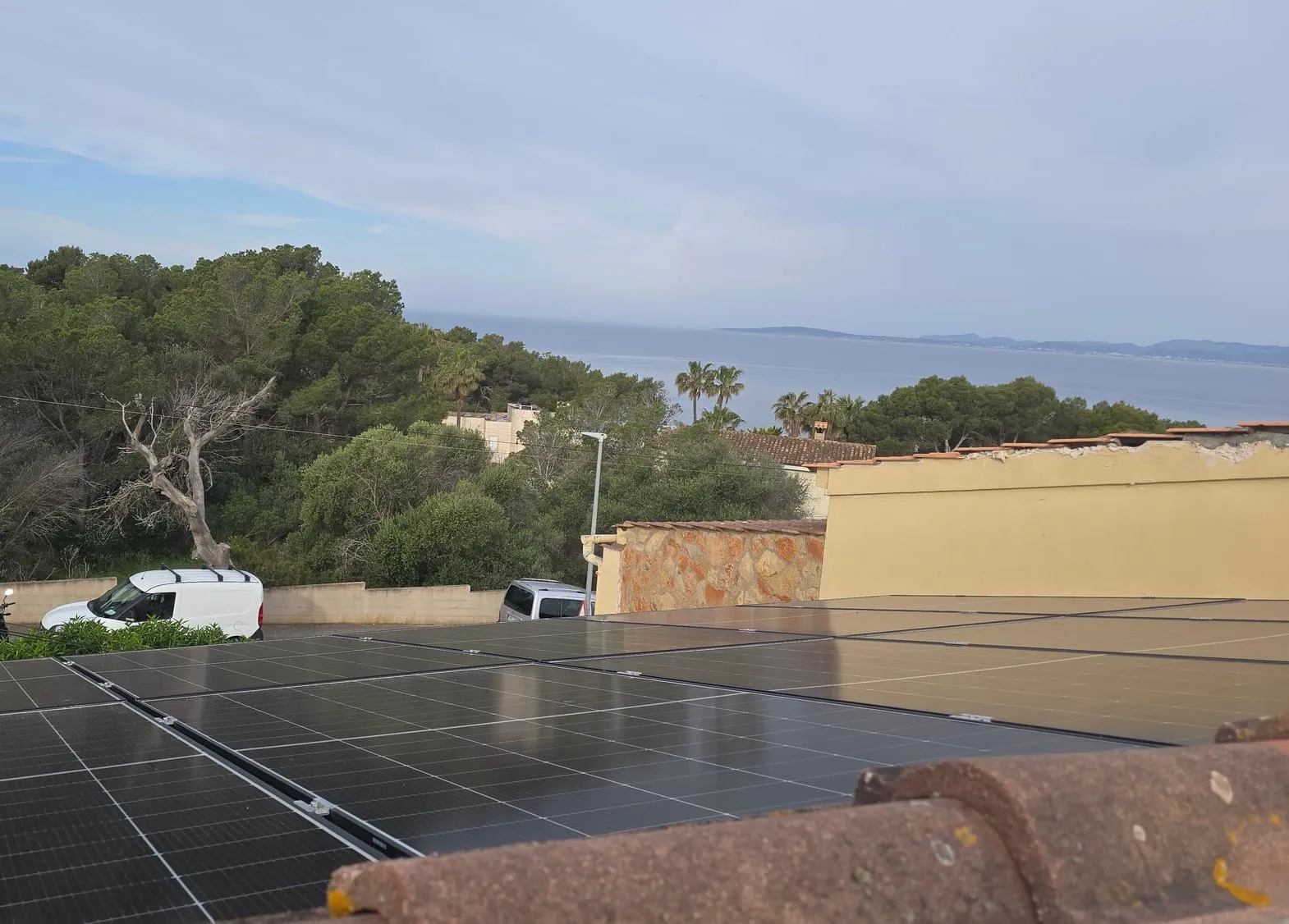
Without a battery you use roughly half of what your panels produce; the rest goes to the grid at a low rate. With a well-sized battery you use more than 80 %: the difference between buying that energy at €0.18/kWh and having it credited at €0.06/kWh.
The jump is bigger the more you use at night: a heat pump, a pool, an electric car or a family at home in the evenings. In the study we give you the numbers with your own data, so you can decide on facts.
How much battery you need
The rule is simple: the battery should cover what you use from sunset to sunrise. In a Mallorcan home that is usually between 4 and 8 kWh, rising considerably with a heat pump or an electric car.
We do not oversize. A battery that does not fill and empty almost every day takes far longer to pay back — it is money sitting on the wall. If in doubt, nearly all the brands we install can be expanded later with extra modules.
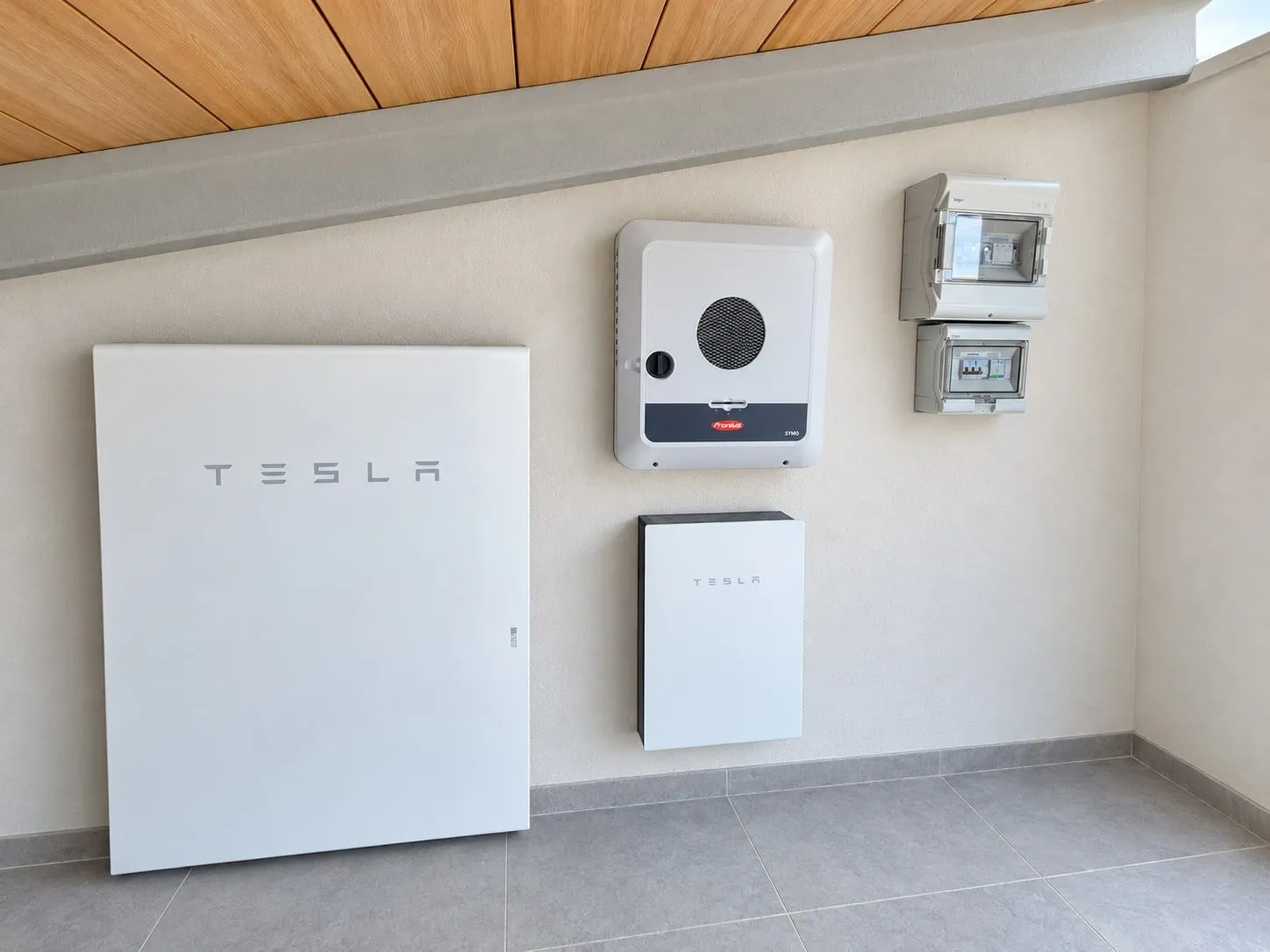
Tesla Powerwall 3: the all-in-one option
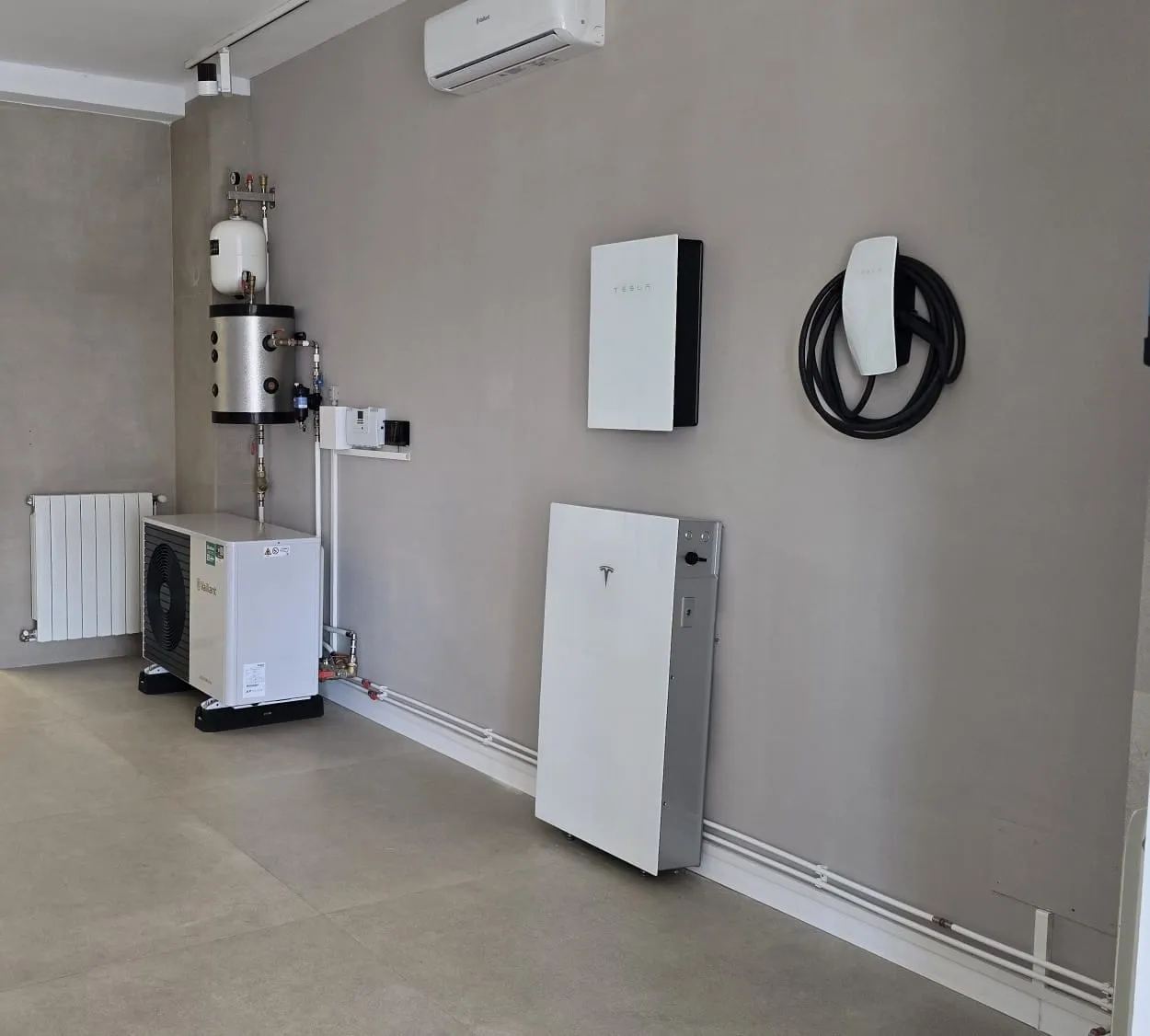
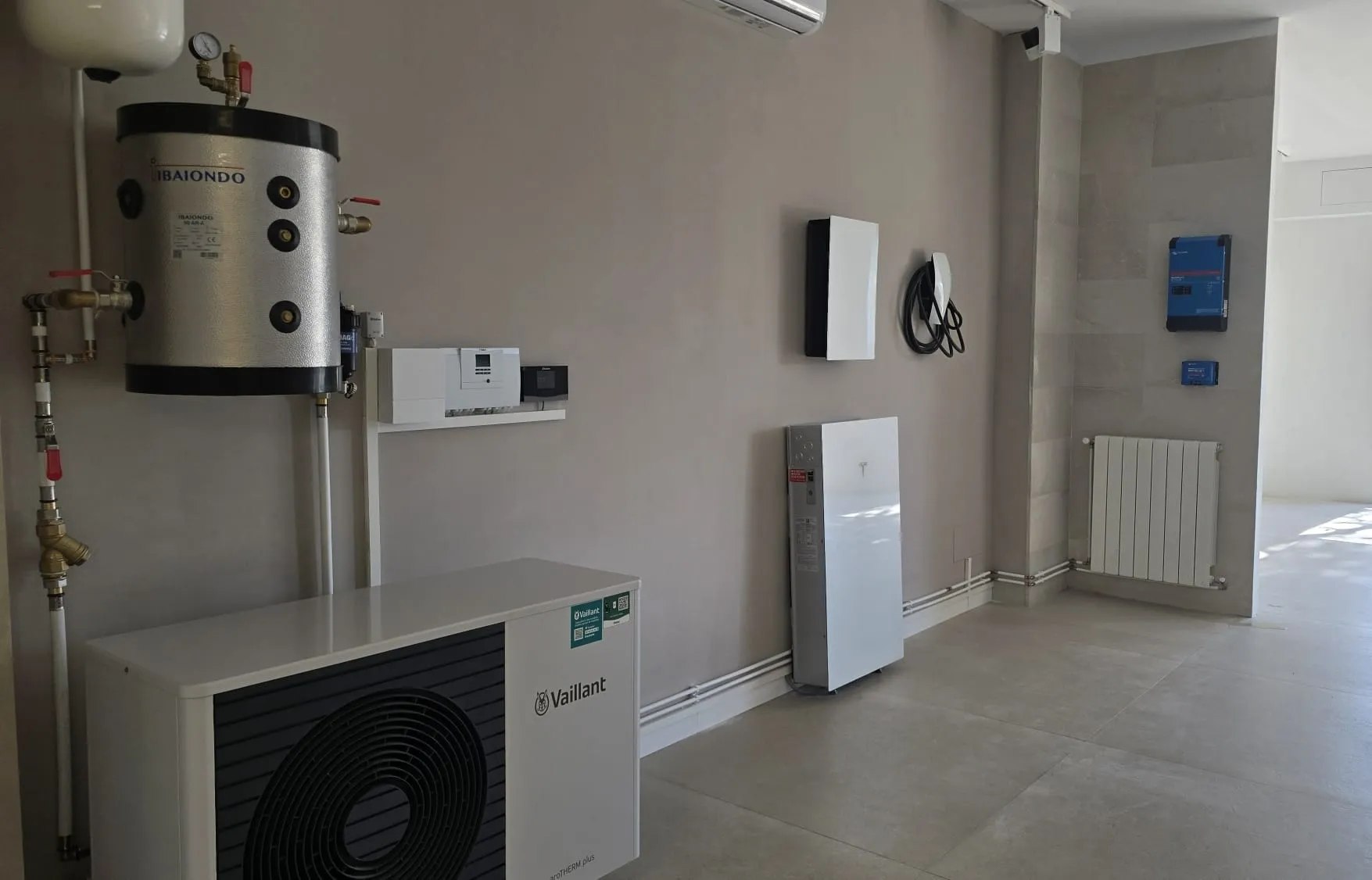
Powerwall 3 combines a 13.5 kWh battery and a solar inverter in one compact unit, suitable indoors or outdoors. It can be expanded with additional units for large homes or high night-time use.
As certified Tesla installers we design the whole system: sizing, backup switchboard, integration with your panels and app set-up. Tesla gives a 10-year warranty on the Powerwall.
Other batteries to suit your system
Not every system needs the same battery. We choose the brand according to your existing inverter, power, space and budget:
- Fronius Reserva: for Fronius GEN24 hybrid inverters, expandable in modules
- BYD Battery-Box: modular and compatible with many hybrid inverters
- Victron Energy: off-grid systems, fincas and bespoke projects
- Enphase IQ Battery: for systems with Enphase microinverters
Power when the power goes out
With backup, the house keeps running during a power cut. A backup switchboard is installed and we agree with you which circuits stay on: usually fridge, lights, wifi, alarm and a few sockets — and, if the power allows, the heat pump too.
As long as the sun is up, the panels keep charging the battery during the outage, so the house can last more than a day. It is one of the main reasons customers in areas with frequent cuts take the step.
Where it goes, and how safe it is
The batteries we install are lithium iron phosphate (LFP), the most stable chemistry, with their own management system and protections. They go in a garage, storeroom, plant room or sheltered outside wall — somewhere ventilated, out of direct sun and easy to reach.
The installation is registered together with the solar system and handed over with its documentation and certificates. They are silent, so they will not bother anyone even near a living area.
Batteries for companies and apartment blocks
In a business the battery also trims demand peaks and shifts use to expensive hours, and in critical processes it avoids stoppages during a cut. In apartment blocks it makes better use of collective self-consumption for communal services: lift, garage, lighting and pumps.